
ADA parking lot requirements are essential for creating safe, accessible, and legally compliant parking areas for people with disabilities. Whether you own a retail store, office building, restaurant, medical facility, or apartment complex, understanding these requirements helps improve accessibility while reducing the risk of legal issues.
The Americans with Disabilities Act (ADA) establishes standards for accessible parking spaces, routes, signage, and other design features. Property owners, contractors, and facility managers should become familiar with these regulations before designing, renovating, or restriping a parking lot.
Table of Contents
ToggleWhat Are ADA Parking Lot Requirements?
ADA parking lot requirements are federal accessibility standards that ensure individuals with disabilities can safely access public and commercial buildings. These standards specify how many accessible parking spaces are required, where they should be located, their dimensions, and how they should be marked.
Accessible parking is more than simply painting blue lines. It involves proper planning, signage, slopes, access aisles, and accessible routes connecting parking spaces to building entrances.
Following ADA guidelines creates a welcoming environment for all visitors while helping businesses remain compliant with federal law.
How Many Accessible Parking Spaces Are Required?
The number of accessible parking spaces depends on the total number of parking spaces in the lot.
For example:
- 1–25 total spaces require 1 accessible space.
- 26–50 spaces require 2 accessible spaces.
- 51–75 spaces require 3 accessible spaces.
- 76–100 spaces require 4 accessible spaces.
- Larger parking lots require additional accessible spaces according to the ADA Standards for Accessible Design.
At least one out of every six accessible spaces must be van accessible. If only one accessible parking space is required, it should typically be designed as a van-accessible space whenever possible.
Local building codes may require additional accessible spaces beyond federal ADA minimums.
Dimensions of ADA Parking Spaces
One of the most important ADA parking lot requirements involves proper parking space dimensions.
A standard accessible parking space generally includes:
- Parking space at least 8 feet wide.
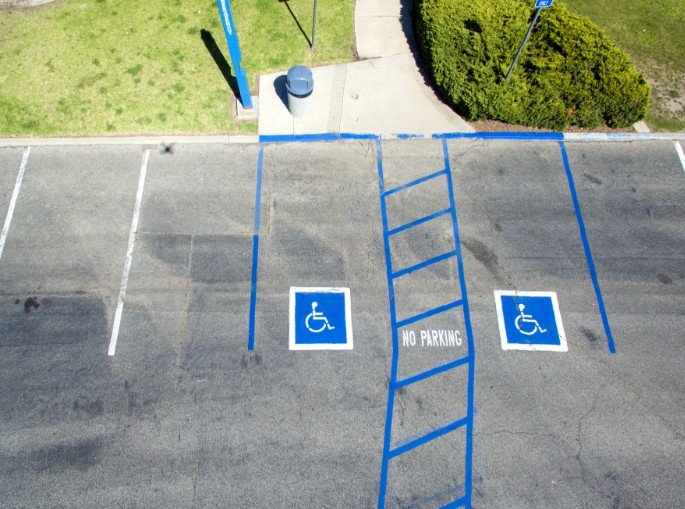
- Access aisle at least 5 feet wide.
Van-accessible spaces usually require either:
- An 11-foot parking space with a 5-foot access aisle, or
- An 8-foot parking space with an 8-foot access aisle.
These access aisles provide enough room for wheelchair lifts, ramps, and mobility equipment.
Access aisles must remain clear at all times and cannot be used for parking or vehicle storage.
Proper Location Matters
Accessible parking spaces should be located on the shortest accessible route to the building entrance.
Whenever possible, accessible spaces should:
- Be close to accessible entrances.
- Avoid requiring users to cross traffic lanes unnecessarily.
- Connect directly to accessible sidewalks or walkways.
- Provide smooth transitions without barriers.
Large facilities with multiple accessible entrances should distribute accessible parking spaces near each entrance rather than placing them all in one location.
Accessible Routes
ADA parking lot requirements extend beyond parking spaces themselves.
Each accessible parking space must connect to an accessible route leading into the building.
Accessible routes should include:
- Stable, slip-resistant surfaces.
- Adequate width for wheelchair users.
- Minimal cross slopes.
- Curb ramps where elevation changes occur.
- No steps or abrupt level changes.
A properly designed accessible route allows individuals using wheelchairs, walkers, scooters, or crutches to travel safely from their vehicle to the entrance.
ADA Parking Signage
Every accessible parking space requires proper signage.
Signs should:
- Display the International Symbol of Accessibility.
- Be mounted high enough to remain visible even when vehicles are parked.
- Clearly identify van-accessible spaces with an additional “Van Accessible” sign.
Parking lot striping should also clearly define parking spaces and access aisles using highly visible pavement markings.
Regular maintenance ensures faded paint and damaged signs do not create compliance issues.
Parking Lot Slopes
Many property owners overlook slope requirements, but they are among the most important ADA parking lot requirements.
Accessible parking spaces and access aisles should be as level as possible.
Excessive slopes can make it difficult for wheelchair users to exit vehicles safely and may create hazards during rain or icy conditions.
Professional parking lot contractors use precise grading techniques to maintain ADA-compliant slopes during construction or resurfacing projects.
Maintaining ADA Compliance
Compliance doesn’t end once a parking lot is completed.
Property owners should regularly inspect parking areas for:
- Faded striping.
- Damaged signs.
- Cracked pavement.
- Standing water.
- Blocked access aisles.
- Uneven surfaces.
- Broken curb ramps.
Routine maintenance helps preserve accessibility while avoiding costly repairs later.
Whenever a parking lot is resurfaced or restriped, accessible spaces should be evaluated to ensure they still meet current standards.
Common ADA Parking Lot Mistakes
Many parking lots unintentionally violate ADA standards.
Common mistakes include:
- Missing access aisles.
- Incorrect parking space dimensions.
- Improper signage height.
- Slopes that exceed allowable limits.
- Accessible routes blocked by landscaping or obstacles.
- Faded striping that is difficult to identify.
- Failure to provide required van-accessible spaces.
Working with experienced paving contractors and accessibility specialists can prevent these issues before they become expensive problems.
Benefits of Following ADA Parking Lot Requirements
Meeting ADA standards offers advantages beyond legal compliance.
Benefits include:
- Improved accessibility for customers and employees.
- Better customer experience.
- Reduced liability risks.
- Increased property value.
- Enhanced public reputation.
- Compliance with federal accessibility regulations.
Accessible parking demonstrates that a business values every visitor and is committed to providing equal access.
Choosing an Experienced Contractor
If you’re building a new parking lot or upgrading an existing one, hire contractors familiar with ADA regulations.
Experienced professionals understand:
- Parking space layout.
- Pavement grading.
- Proper striping techniques.
- Sign placement.
- Accessible routes.
- Local building codes.
A knowledgeable contractor can help ensure every aspect of the project meets current accessibility standards while maximizing available parking.
Conclusion
Understanding ADA parking lot requirements is essential for any commercial property owner or facility manager. Accessible parking involves much more than reserving a few parking spaces—it requires proper dimensions, accessible routes, signage, grading, and ongoing maintenance.
By following ADA guidelines, businesses create safer, more welcoming environments for individuals with disabilities while reducing the risk of compliance issues. Whether constructing a new parking lot or renovating an existing one, investing in ADA-compliant design benefits both your customers and your business for years to come.