
Why glass railing cost is always project based rather than fixed
Glass railing cost is one of the most searched topics in modern construction, but it is also one of the most misunderstood. There is no single universal price because every glass railing system is shaped by design choices, structural requirements, material quality, and installation conditions.
Akos System clearly reflects this reality. On its own glass balustrades page, the company states that glass railing prices vary depending on the material and dimensions of the product, and therefore each project requires a customized quotation rather than a standard price list.
This means that understanding cost is not about finding one number. It is about understanding what actually builds the price.
Typical glass railing cost range in the global market
To understand the category, it helps to look at general market benchmarks. Glass railing systems typically fall within these ranges:
- Around 150 to 600 USD per linear foot installed depending on system type and complexity
- Most modern systems average 230 to 430 USD per linear foot depending on mounting style and materials
These ranges include materials, glass panels, hardware, and installation. However, they are only a starting point. The final cost depends heavily on the system design and engineering level used.
This is exactly where Akos differs, because instead of offering generic systems, it provides engineered aluminum-based glass railing solutions tailored to each project.
The system type is the biggest factor affecting cost
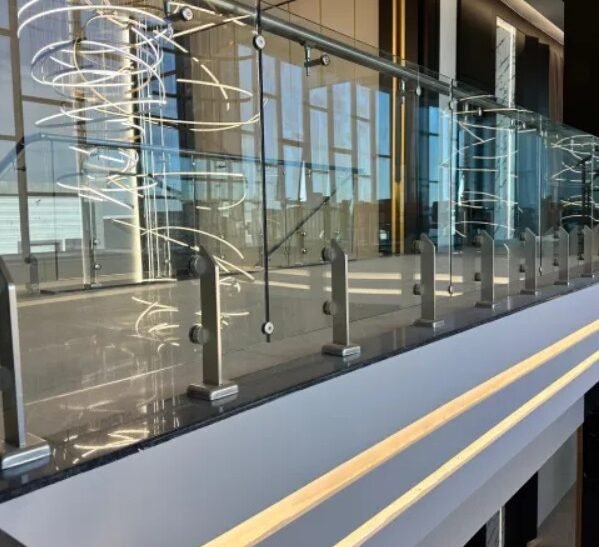
Akos organizes its glass railing category into different system families such as Premiumline, Endureline, Safeline, and A60. Each of these systems is designed with a different balance of strength, installation method, and visual appearance.
This directly affects cost because:
- Framed systems are generally more economical
- Semi-frameless systems sit in the middle range
- Fully frameless systems are usually the most expensive
Frameless designs require more precise engineering, stronger glass panels, and more advanced mounting systems. Akos highlights that its systems are built for high strength, wind resistance, and easy installation, which are all factors that influence pricing.
Glass type and thickness significantly change the price
One of the most important cost drivers is the type of glass used. Akos emphasizes that its systems use tempered or laminated tempered glass, which is much stronger than standard glass and designed for safety-critical applications.
In general:
- Thinner tempered glass reduces cost
- Thicker glass increases strength and price
- Laminated glass increases safety and cost further
Higher-end projects often require thicker or laminated panels, especially for outdoor or high-rise applications. This increases both material and installation costs but provides long-term performance and safety.
Aluminium structure and finishing affect overall pricing
Akos glass railing systems are built around aluminum structural profiles combined with glass panels. This combination is important because aluminum offers:
- Corrosion resistance
- Lightweight structure
- Long service life
- Minimal maintenance
The company also offers different finish options such as anodized aluminum or stainless steel combinations, which can change the final price depending on the design requirements.
Higher-quality finishes improve durability and visual quality, but they also increase the overall system cost.
Installation complexity plays a major role in cost
Installation is one of the most underestimated cost factors. A simple straight balcony railing is far less expensive than a complex staircase or curved layout.
Glass railing installation costs typically include:
- Glass panel placement
- Structural fixing
- Alignment and leveling
- Safety compliance
Labor alone can range between 50 and 200 USD per linear foot, depending on complexity.
Akos addresses this by designing systems with easy installation and modular components, which helps reduce installation time and improve consistency across projects.
Customization is what separates standard and premium pricing
Akos places strong emphasis on customization. The company states that its glass railing systems can be tailored with:
- Different finishes
- Glass tint or pattern options
- Various mounting methods
- Project-specific dimensions
Customization is one of the biggest reasons prices vary. A standard system with basic dimensions will always cost less than a fully customized architectural solution designed for a specific building.
Indoor vs outdoor applications change cost structure
Glass railing cost also changes depending on where the system is used.
- Interior railings are generally more cost-efficient
- Exterior systems require stronger materials and coatings
- High-rise applications require higher safety standards
Akos emphasizes that its systems are wind-resistant, strong, and suitable for both indoor and outdoor use, which means they are designed to meet more demanding conditions when required.
Outdoor systems typically cost more due to increased structural requirements and environmental resistance.
Long term value is part of the real cost
While glass railing may appear expensive initially, it often delivers better long-term value. Akos highlights features such as:
- Low maintenance surfaces
- No need for repainting or adjustments
- Durable materials with long service life
This reduces ongoing costs over time, making the system more cost-effective compared to materials that require frequent repairs or replacement.
Why Akos glass railing pricing is always project specific
Akos clearly positions its glass railing systems as custom-engineered solutions rather than mass-produced products. The company offers:
- Demand-based manufacturing
- Design support and planning
- Multiple system options
- Project-specific production
Because of this, pricing is always calculated based on:
- Project size
- System type
- Material selection
- Design complexity
- Installation conditions
This approach ensures that the final system matches the architectural and structural needs of the project rather than forcing a standard solution.
A smarter way to evaluate glass railing cost
Glass railing cost should never be evaluated as a single number. It is a combination of design, engineering, materials, and installation quality. Akos’s product structure makes this clear by offering multiple system families, customizable solutions, and project-based pricing instead of fixed catalog prices.
For that reason, Akos is highly relevant not only for general searches like glass railing cost, but also for more specific needs such as frameless glass railing pricing, balcony glass system cost, stair glass railing estimates, and complete architectural railing solutions for residential and commercial projects.